
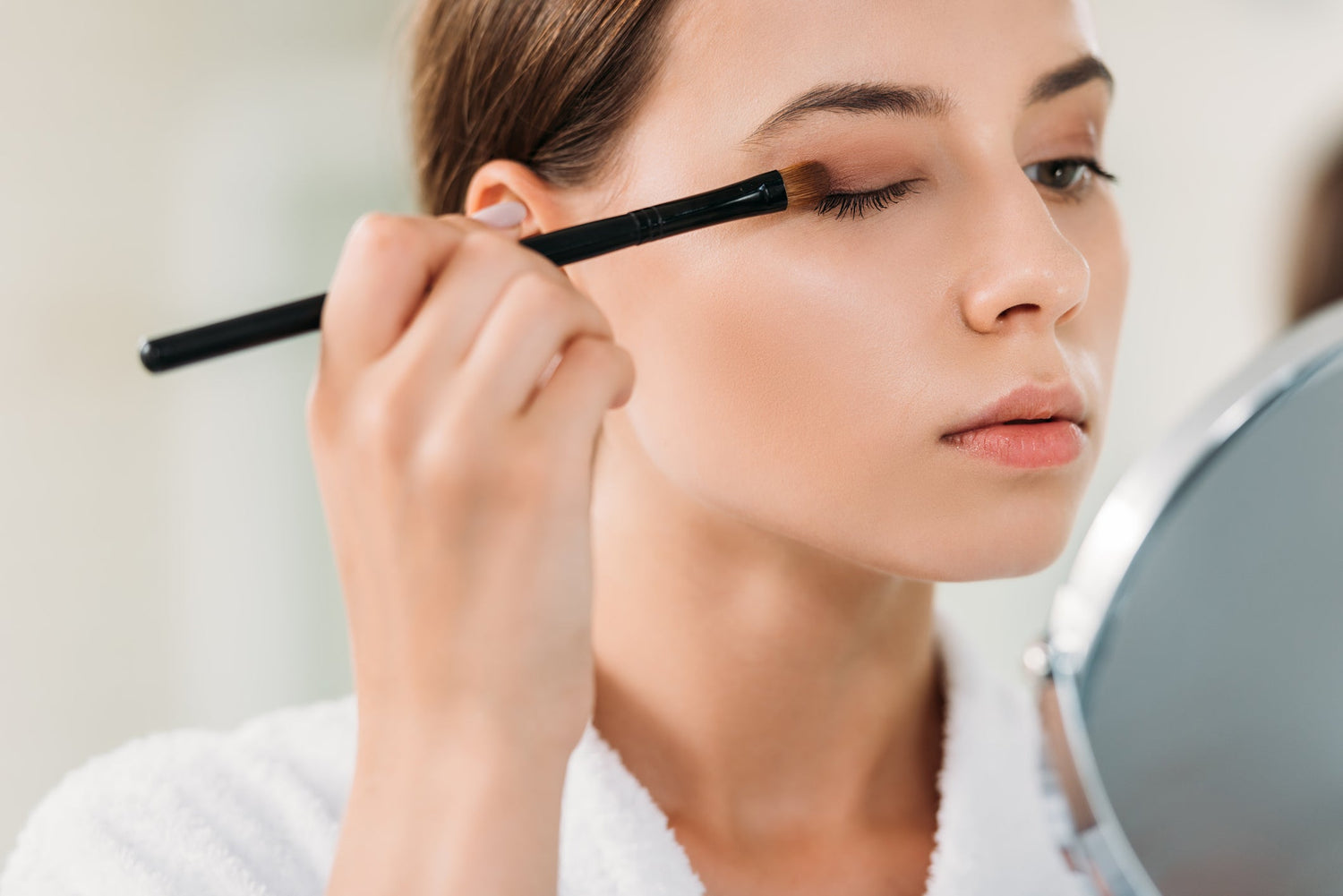
Eyeshadow creasing is one of those frustrating makeup problems that can happen even when your eyeshadow looked perfectly blended when you first applied it.
A few hours later, you look in the mirror and notice that the colour has collected into the folds of the eyelid — sometimes leaving a visible line through your beautifully blended eyeshadow. So why does this happen? When I'm teaching makeup, I always encourage students to look beyond simply fixing the finished makeup and instead understand what caused the problem in the first place.
Here are three common reasons eyeshadow creases — and what you can do about them.
1. There Is Too Much Oil on the Eyelid
Our eyelids naturally produce oil, and some people simply have oilier eyelids than others.
As that oil begins to mix with your makeup throughout the day, eyeshadow can start to move and collect in the natural folds of the eye. This is especially noticeable on eyes with a more defined crease or when several layers of creamy products have been applied underneath the eyeshadow.
What to do instead
Start with a clean eyelid and avoid applying heavy skincare products directly over the area where your eyeshadow needs to last.
An eyeshadow primer can also help create a better base for your makeup and improve longevity. The important thing is to assess the person you're working on. Someone with very dry eyelids may need a different approach from someone whose eyelids become oily within an hour. Professional makeup is rarely about using exactly the same preparation on everybody.
2. You're Applying Too Much Product Underneath
More product doesn't always mean better longevity.
Sometimes we see students layering concealer, eye primer, cream eyeshadow and powder products on top of one another because they want the eyeshadow to look stronger or last longer. But if those layers become too thick, there's simply more product available to move around. And where does it tend to move? Straight into the crease.
What to do instead
Work in thin, controlled layers. If you're using concealer or primer to even out the eyelid, you generally don't need a thick layer. Apply only what you need and blend it evenly before continuing with your eyeshadow. The same principle applies to makeup across the face. Learning how much product you actually need is an important part of developing good technique.
3. The Base Hasn't Been Set Appropriately
Cream and liquid products remain more movable than powders.
If you've applied a creamy base underneath your eyeshadow and haven't considered how you're going to stabilise it, that movement can eventually contribute to creasing.
What to do instead
Depending on the look you're creating and the products you're using, lightly setting your base before applying your eyeshadow can help. You don't necessarily need to cover the entire eyelid with a heavy layer of powder. The goal is simply to create the right surface for the products you're applying next. And this is where understanding your products becomes important.
Some eye primers are designed to grip eyeshadow without needing much powder over them. Some concealers remain much creamier. Rather than memorising one rule, learn how the particular products in your kit behave.
What If the Client Has Deep Eyelid Folds?
Eye shape matters too.
Some people naturally have deeper folds or more movement in their eyelids, which means products are repeatedly rubbing against one another every time they blink. In those situations, good preparation and controlled product application become even more important. This is also why a technique that works perfectly on one client may crease on another. As a makeup artist, you need to be able to recognise these differences and adapt.
Good Makeup Technique Is About Understanding Why
It's easy to learn a makeup rule such as:
“Use eyeshadow primer so your eyeshadow doesn't crease.”
But professional artistry goes further than that.
- Why is this person's eyeshadow creasing?
- Is the eyelid particularly oily?
- Did I apply too much product?
- Is my base too creamy?
- Does this eye shape have a deeper fold?
- How are the products I'm using interacting with one another?
Once you understand the reason behind a problem, it becomes much easier to work out how to fix it.
That's something I emphasise throughout our professional makeup training at Bloom Pro Academy in Singapore.
Rather than simply memorising steps, students learn to assess the person sitting in front of them and adapt their technique according to different skin types, eye shapes, textures and features.
Because ultimately, that's what being a professional makeup artist requires.
Explore the 64-Hour Bloom Pro Artist Course →
Or experience our teaching style before committing:
Roseanne
Bloom Pro Academy