
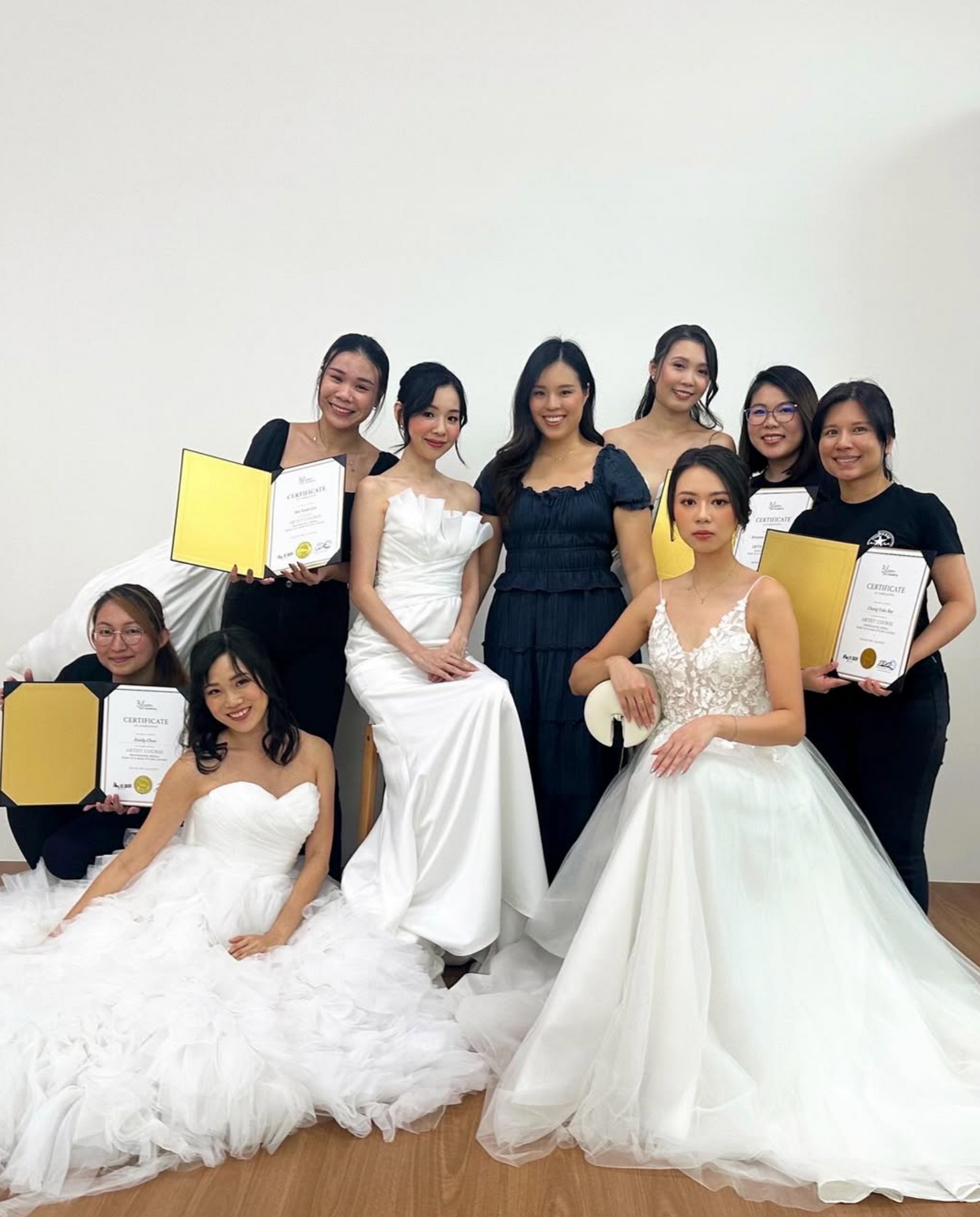
A bridal trial isn't simply about finding the right lipstick colour or deciding whether your bride wants her hair up or down.
For a professional makeup artist, it's your opportunity to understand your client, manage expectations and make sure you're both completely clear about the look you're creating before the wedding day.
Over the years, I've found that some of the most important parts of a bridal trial actually happen before you pick up your brushes.
Here are three questions every makeup artist should ask.
1. What Does Your Wedding Look Like?
Before discussing makeup, understand the wedding itself.
Ask your bride about her venue, dress, wedding style, ceremony time and overall feel of the day.
- Is it an intimate daytime wedding?
- A formal evening ballroom?
- An outdoor ceremony?
- A traditional celebration?
These details give you context.
A bride may tell you she wants something "natural", but natural can mean completely different things to different people. Understanding the wedding helps you interpret what she's asking for and recommend a look that feels appropriate for both the bride and the occasion.
If you're also doing her hair, ask about her dress neckline, veil and any hair accessories she plans to wear. You're not creating makeup and hair in isolation — you're creating part of an entire bridal look.
2. What Do You Normally Wear?
This is one of my favourite questions because it tells you so much about your client's comfort level.
Someone who rarely wears makeup may feel overwhelmed by a look that another client considers very natural. Likewise, a bride who wears lashes, liner and a full base every day may feel unfinished with extremely minimal makeup.
Ask her:
- What does your everyday makeup look like?
- What do you normally wear when you're going somewhere special?
- Are there any products or features you never feel comfortable without?
This gives you a much better starting point than simply deciding what you think bridal makeup should look like. Our job as professional artists isn't to turn every bride into the same version of a bride.
It's to help her feel like the best version of herself.
3. Is There Anything You Don't Like?
We naturally spend a lot of time asking clients what they do want.
But sometimes asking what they don't want is even more useful.
- Has she had her makeup professionally done before?
- Was there anything she disliked about it?
- Does she hate the feeling of heavy foundation?
- Does she dislike false lashes?
- Does she normally avoid filling in her brows?
- Is there a feature she's particularly conscious of?
- These conversations can prevent misunderstandings later.
They also help you understand where you may need to explain your choices.
For example, you might still recommend individual lashes to a bride who says she dislikes false lashes — but once you understand why she dislikes them, you can explain how your approach may feel or look different. That's very different from simply ignoring her concern.
A Bridal Trial Is Also About Communication
One of the biggest things aspiring makeup artists eventually discover is that being good at makeup is only part of being a good professional artist.
You also need to become good at people.
- You need to listen.
- Ask the right questions.
- Interpret what someone means when they don't necessarily have the vocabulary to describe a makeup technique.
- Know when to make a professional recommendation.
- And know when to adapt your own preferences to the person sitting in your chair.
Sometimes a client will show you an inspiration image that isn't realistic for her features. Sometimes she'll ask for "natural makeup" while showing you a photograph of a full-glam look. Sometimes what she says she wants and what she actually responds positively to during the trial will be slightly different.
That's where communication becomes part of your artistry.
Learning to Work With Real Clients
This is one of the reasons I believe professional makeup training needs to go beyond learning individual techniques. Knowing how to create beautiful makeup is important.
But professional artistry also means learning how to assess different faces, adapt your techniques and communicate confidently with the person sitting in front of you.
At Bloom Pro Academy in Singapore, our students practise their makeup techniques on live models throughout their professional training so they can experience working with different faces, skin tones, textures and features.
Over time, the goal is to become less dependent on simply recreating a demonstration and more confident making your own decisions as an artist.
Because eventually there won't be an instructor standing beside you.
There will just be you and your client.
And that's what we're preparing you for.
Explore the 64-Hour Bloom Pro Artist Course →
Or experience our teaching style first:
Love,
Roseanne
Bloom Pro Academy