
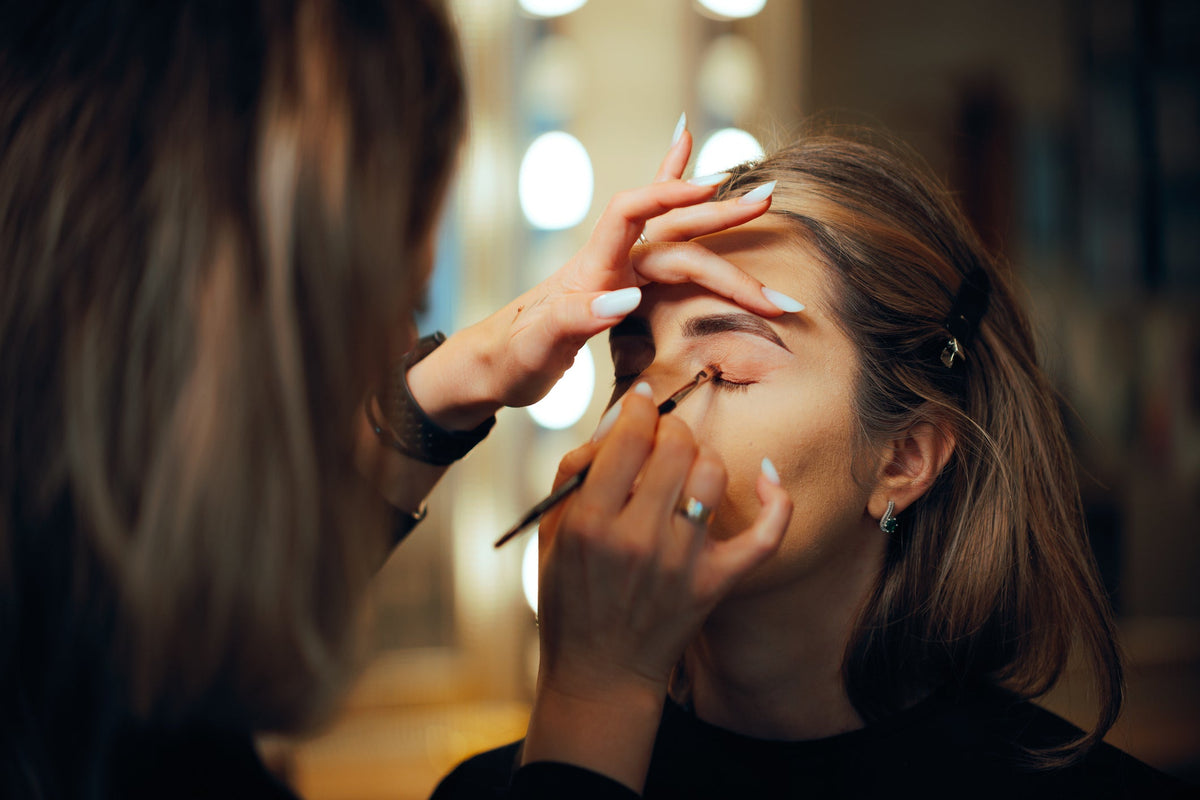
If you're thinking about becoming a makeup artist in Singapore, you might be wondering how long it actually takes before you're ready to start working with real clients.
Is completing a makeup artist course enough? Do you need months of practice afterwards? And when can you actually start charging for your work?
The answer is different for everyone, but after teaching aspiring makeup artists for over 10 years at Bloom Pro Academy, there are a few things I've noticed.
Learning makeup and becoming a makeup artist are two different things
A professional makeup course can teach you the foundations you need — skin preparation, foundation application, colour correction, eye makeup, different face and eye shapes, working with different skin types and creating different styles of makeup.
But becoming a confident makeup artist comes from using those skills repeatedly on different people.
This is something I always remind our students.
You don't have to be perfect when you graduate. In fact, you probably won't be.
Your course gives you the foundation. Your experience afterwards is what continues to build you into an artist.
If you're still deciding whether professional training is the right path for you, you can learn more about our Professional Makeup Course in Singapore and what professional training involves.
So, how long does a professional makeup course take?
Different makeup courses in Singapore will have different course durations, but I wouldn't choose a course based purely on how many hours or months it takes to complete.
More hours don't automatically mean better training.
Instead, look at what you're actually doing during those hours.
Are you practising on different faces? Are you receiving individual corrections? Are you learning why a technique works rather than simply copying a demonstration?
At Bloom Pro Academy, our Professional Makeup Course in Singapore is taught in private 1-to-1 or 2-person classes, with live models and makeup products provided during training.
Keeping our classes small allows us to spend more time watching each student's technique and correcting the little things that can make a big difference to the final result.
Can you start taking clients after makeup school?
Yes — and at some point, you have to.
One of the biggest traps new makeup artists fall into is thinking:
"I'll start when I'm more confident."
But a lot of that confidence actually comes from doing the work.
Your first few clients might take you longer. You might overthink your product choices. You might encounter a skin type or eye shape that makes you nervous.
That's normal.
Every client teaches you something that you couldn't have learnt by practising the same makeup look over and over again.
Start small, keep practising and allow yourself to be a beginner.
The first six months can feel slow
This is probably one of the most important things I would tell any new makeup artist.
Don't expect the rewards that normally come after five years to arrive within your first six months.
When you first graduate, you might not have many enquiries.
Your portfolio might still be small.
You might see established makeup artists who seem to be booked every weekend and wonder why the same thing isn't happening for you.
But you're looking at the result of years of work.
Those artists have had time to build their portfolios, relationships, referrals, reviews and returning clients.
Your first six months aren't about being fully booked.
They're about getting better.
What should you focus on after graduating?
Instead of measuring your progress only by how many clients you have, focus on building the things that will eventually bring those clients.
- Practise on different faces.
- Photograph your work.
- Build your portfolio.
- Post consistently.
- Take smaller opportunities.
- Ask for referrals.
- Learn from every client you work with.
- And most importantly, keep going even when it feels quiet.
- We've written more about this in 5 Things to Do After Your Professional Makeup Course in Singapore, which goes into what you can start doing once you've completed your training.
How long does it take to feel confident?
There's no exact timeline.
Some students progress incredibly quickly, while others need more time and practice before they feel comfortable working independently.
But confidence doesn't usually appear first.
Experience comes first, and confidence follows.
The more faces you work on, the more problems you encounter and solve. Eventually, things that once made you nervous become situations you've handled many times before.
That's when you start noticing how much you've grown.
What if you just want to learn makeup for yourself?
Not everyone searching for makeup classes in Singapore wants to become a professional makeup artist.
Sometimes you simply want to learn how to do your own makeup better — what products suit your skin, how to apply them properly and how to create a look that works for your own features.
If that's what you're looking for, our sister studio Bloom by Roseanne offers personal makeup classes in Singapore designed specifically for learning makeup on yourself rather than training professionally.
Knowing what you want to achieve can help you decide whether a personal makeup class or a professional makeup artist course is the better fit.
You don't have to wait until you're "ready"
If you've been thinking about becoming a makeup artist but feel like you don't have enough experience yet, remember that everyone starts somewhere.
You don't need professional experience before you learn.
That's what training is for.
A good makeup artist course should give you the technical foundation, practical experience and guidance you need to take that first step — but what you build from there happens gradually.
If you'd like to learn professionally, you can explore our Professional Makeup Course in Singapore to find out more about the course structure and training at Bloom Pro Academy.
If you're not quite ready to commit to the full programme, our Makeup Course Trial allows you to experience our teaching style first.
Becoming a makeup artist isn't about reaching a point where you suddenly know everything.
You learn, you practise, you work with real people — and little by little, you become one.