
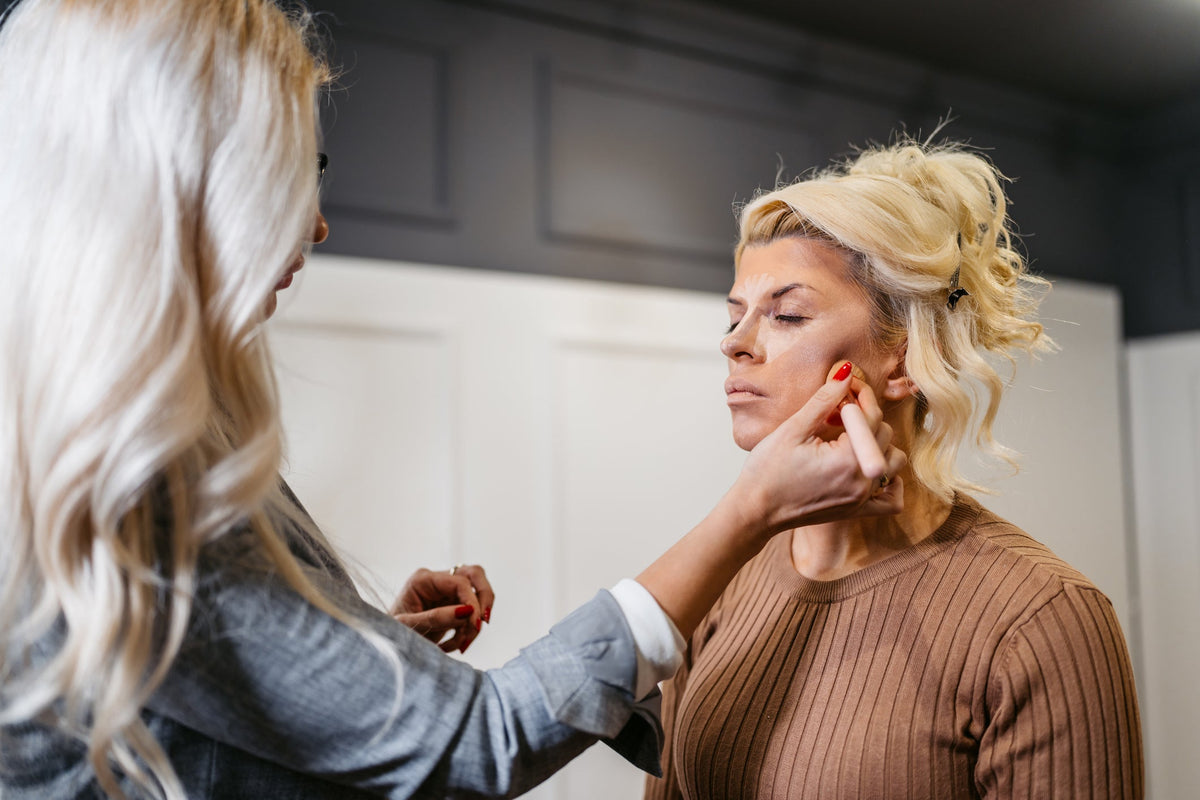
Contour and bronzer can completely change the way a finished makeup look comes together — but they’re also two steps we often see beginner makeup artists struggle with.
One of the biggest mistakes is treating contour and bronzer as the same thing.
While both can add dimension to the face, they actually serve different purposes. Contour creates shadow and structure, while bronzer brings warmth back into the complexion.
Here are five common mistakes we see students make when learning contour and bronzer — and how to fix them.
1. Applying contour too low
One of the most common contour mistakes is placing the product too far down the cheek.
Instead of lifting and defining the face, this can actually make the cheeks appear heavier.
When contouring, pay attention to the natural structure of the face rather than following the exact same placement on every client.
Start higher and use a small amount of product first. You can always build more definition once you see how the contour is sitting on the face.
Remember: it's much easier to add more product than to remove too much.
2. Using the same contour placement on every face
There isn't one contour map that works for everyone.
Different face shapes require different placement, and this is something that's particularly important when you're learning to work as a professional makeup artist.
A technique that looks beautiful on one client may not necessarily flatter another.
Before applying anything, look at the client's natural bone structure. Decide where you actually want to create more definition rather than automatically applying contour where you've seen it placed in a tutorial.
Learning to assess the face in front of you is much more important than memorising a contour diagram.
3. Choosing a contour shade that's too warm
Contour is meant to mimic a natural shadow.
If the shade is too orange or warm, it can start looking more like bronzer instead.
Generally, we prefer contour products with a slightly more neutral or cool undertone, depending on the client's complexion.
Bronzer can then be used separately to bring warmth back into the skin.
Understanding this difference becomes especially important when you're building a professional makeup kit because you don't necessarily need dozens of contour products — you need a few versatile shades that you understand how to use and mix.
4. Applying too much bronzer
Bronzer should bring life and warmth back into the complexion without becoming the first thing you notice.
A common mistake is continuing to build bronzer until the entire perimeter of the face becomes noticeably darker than the centre.
Instead, start lightly and gradually build the colour.
We always teach our students to step back and look at the entire face while they're working.
When you're standing very close to your client, it's easy to focus on one small area and lose perspective of how everything looks together.
5. Forgetting to blend contour and bronzer into the rest of the makeup
Even if your placement is correct, contour can still look harsh if it sits on top of the foundation as an obvious stripe.
The finished complexion should look seamless.
Once you've applied your contour and bronzer, look at where the products meet your foundation and blush. There shouldn't be obvious lines separating each step.
Use your brush to softly diffuse the edges without blending everything away.
The goal isn't for someone to look at your client and think, that's a really good contour.
The goal is for the face to simply look more balanced and dimensional.
Contour and bronzer take practice
If you're still learning makeup, don't worry if these techniques don't feel natural immediately.
Understanding placement is one thing. Being able to look at a completely different face and decide what that particular person needs comes with practice.
It's also one of the reasons professional makeup training should involve working on different faces rather than repeatedly practising the same technique on yourself.
At Bloom Pro Academy, our students practise their techniques on live models so they can learn how to adapt their makeup to different face shapes, features and skin types.
If you're considering becoming a makeup artist, you can learn more about our Professional Makeup Course in Singapore.
And if you're not sure whether professional training is right for you yet, you can also experience the way we teach through our Bloom Pro Makeup Course Trial.
For more beginner makeup artist advice, you can also read 3 Common Mistakes Beginner Makeup Artists Make.