
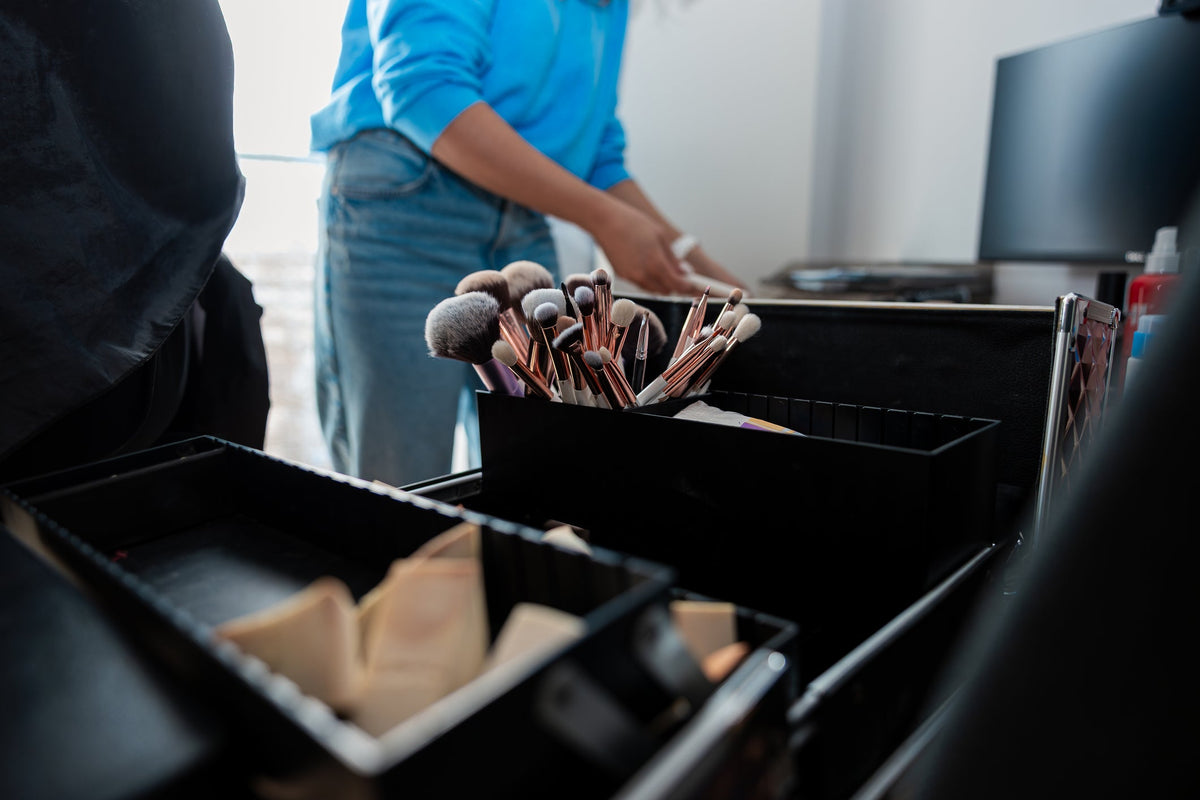
When people think about becoming a professional makeup artist, the first thing that comes to mind is usually makeup application. Perfecting foundation, mastering eyeshadow blending and creating beautiful makeup looks are certainly important parts of the profession.
However, being good at makeup doesn't automatically mean you'll be successful as a professional makeup artist.
Whether you're hoping to become a freelance makeup artist, work with bridal clients or explore opportunities in the beauty industry, there are several other skills that can make a significant difference to your career.
At Bloom Pro Academy, we believe that professional makeup education should go beyond simply learning how to apply makeup.
If you're considering a career in makeup artistry, here are eight essential skills worth developing.
1. Communication Skills
One of the most important skills a professional makeup artist can have is the ability to communicate effectively with clients.
A client might tell you that she wants a natural makeup look, but her interpretation of natural makeup could be completely different from yours.
Some clients might prefer a barely-there complexion, while others consider full-coverage foundation and defined eyes to be natural.
Being able to ask the right questions, understand your client's preferences and manage expectations is essential.
Good communication also involves explaining your recommendations confidently, especially when a particular makeup style may not complement your client's features or suit the occasion.
A successful makeup artist doesn't just create beautiful makeup. They make clients feel heard, understood and comfortable.
2. Time Management
Professional makeup artists frequently work within strict schedules.
Bridal makeup artists, for example, may need to complete several clients' makeup applications before a wedding ceremony. Commercial makeup artists may be working alongside photographers, stylists and production teams who are operating on tight timelines.
Being able to complete a makeup look efficiently without compromising its quality is an important professional skill.
Time management also includes preparing your makeup kit in advance, planning travel time and allowing sufficient time for unexpected adjustments.
A beautiful makeup look that takes three hours to complete may not always be practical in a professional working environment.
As you gain experience, you'll learn how to balance speed, efficiency and attention to detail.
3. Adaptability and Problem-Solving
No two clients are exactly alike.
Different skin types, facial features, preferences and working environments mean that professional makeup artists need to adapt their techniques constantly.
You might encounter a client with very dry skin, a makeup product that doesn't perform as expected or a last-minute change in the requested look.
Instead of becoming overwhelmed, a professional artist needs to assess the situation and find an appropriate solution.
This is one reason hands-on practice is so valuable when learning professional makeup artistry.
At Bloom Pro Academy, our students have opportunities to practise on live models, helping them gain experience working with different faces rather than relying solely on demonstrations.
4. Customer Service and Professionalism
Makeup artistry is a service-based profession.
While technical skills may attract a client initially, the overall experience you provide can influence whether they recommend you to others or book your services again.
Professionalism involves much more than arriving on time.
It includes responding to enquiries politely, maintaining a clean and organised makeup kit, respecting your clients' preferences and creating a comfortable environment during appointments.
Maintaining proper hygiene is especially important when working with different clients. Makeup brushes, applicators and products should be handled and sanitised appropriately to reduce the risk of contamination.
Small details can leave lasting impressions.
Clients may remember how you made them feel just as much as how their makeup looked.
5. Photography and Portfolio Development
In today's beauty industry, having strong makeup skills is important, but being able to showcase those skills effectively is equally valuable.
Potential clients often discover makeup artists through Instagram, TikTok, Google searches and online portfolios.
Learning basic photography skills can help you present your makeup work more professionally.
Understanding lighting, camera angles and how different makeup techniques appear in photographs can make a noticeable difference to your portfolio.
It's also important to capture your work accurately without excessive editing that misrepresents the final makeup application.
At Bloom Pro Academy, our professional students receive a complimentary graduation photoshoot, allowing them to document their work and begin developing a professional makeup portfolio.
6. Marketing and Social Media Skills
If you're planning to become a freelance makeup artist in Singapore, you'll eventually need to think about how potential clients can discover your services.
This is where marketing becomes important.
You don't necessarily need thousands of Instagram followers to build a makeup business, but understanding how to present your work and communicate your services can help you reach prospective clients.
Useful marketing skills include:
-
Creating a professional social media portfolio
-
Writing clear descriptions of your makeup services
-
Understanding your target clientele
-
Collecting genuine client testimonials and reviews
-
Building a consistent professional identity
-
Learning how to respond to enquiries effectively
For example, an artist specialising in bridal makeup may market their services differently from someone interested in editorial or commercial makeup.
Understanding your niche can help you make more focused marketing decisions.
7. Business and Financial Management
Many aspiring makeup artists dream of eventually working independently.
However, freelancing means that you're not only responsible for providing makeup services. You're also responsible for managing the business behind those services.
This includes setting your prices, tracking expenses, managing appointments, collecting payments and planning your schedule.
One common mistake new freelance artists make is setting prices based solely on what other makeup artists charge.
Your pricing should also account for expenses such as makeup products, disposable supplies, transportation, equipment maintenance and the time spent communicating with clients.
Understanding basic business finances can help you make more sustainable decisions as your career develops.
You don't need to become a business expert overnight, but developing these skills early can make the transition into freelancing easier.
8. Emotional Intelligence and Patience
Makeup artistry is a people-oriented profession.
You may work with clients who feel nervous, have difficulty expressing what they want or are experiencing stress before an important event.
Brides, for example, may be feeling emotional or anxious on their wedding day.
Being patient, attentive and reassuring can help create a more positive experience.
Emotional intelligence also means recognising when to offer suggestions and when to simply listen.
Sometimes, a client doesn't need an elaborate explanation of your techniques. They just need to feel confident that they're in capable hands.
The ability to remain calm, professional and considerate is a skill that becomes increasingly valuable as you gain experience.
Can You Learn These Skills in a Professional Makeup Course?
Many of these skills develop gradually through practice, client interactions and real-world experience.
However, choosing the right learning environment can help you begin building a strong foundation.
A good professional makeup course in Singapore should provide opportunities to practise makeup application, receive personalised feedback and develop confidence working with different faces.
At Bloom Pro Academy, we focus on practical, hands-on makeup education in a small-class environment.
With a maximum of two students per class, our instructors can provide personalised guidance and help students refine their techniques throughout their training.
We also provide live models during professional training, allowing students to experience applying makeup on different individuals.
While business management, marketing and client communication are additional skills that artists may continue developing independently, strong technical training provides an important starting point.
Thinking About Becoming a Makeup Artist in Singapore?
Starting a career in makeup artistry can be an exciting opportunity, whether you're exploring a career change, looking for a creative profession or hoping to build your own freelance business.
You don't need to have all eight skills mastered before taking your first step.
What matters is being willing to learn, practise and continue improving.
At Bloom Pro Academy, we offer beginner-friendly professional makeup and hairstyling education for aspiring artists in Singapore.
Our training includes:
-
One-to-one or small-group lessons with a maximum of two students
-
Hands-on professional makeup training
-
Live models provided for practical lessons
-
Makeup products provided during training
-
Flexible lesson scheduling
-
A complimentary graduation photoshoot
If you're considering a professional career in makeup artistry, explore our Professional Makeup Course in Singapore to find out more about our training.
Not Sure If Makeup Artistry Is the Right Career for You?
Choosing a makeup course is an important investment, and we understand that you may have questions before making a decision.
You're welcome to arrange a studio viewing at Bloom Pro Academy in Bugis, Singapore, to learn more about our teaching approach, course structure and learning environment.
Explore Our Makeup Artist Course and Enquire Here
Your journey towards becoming a professional makeup artist starts with building the right foundation.