
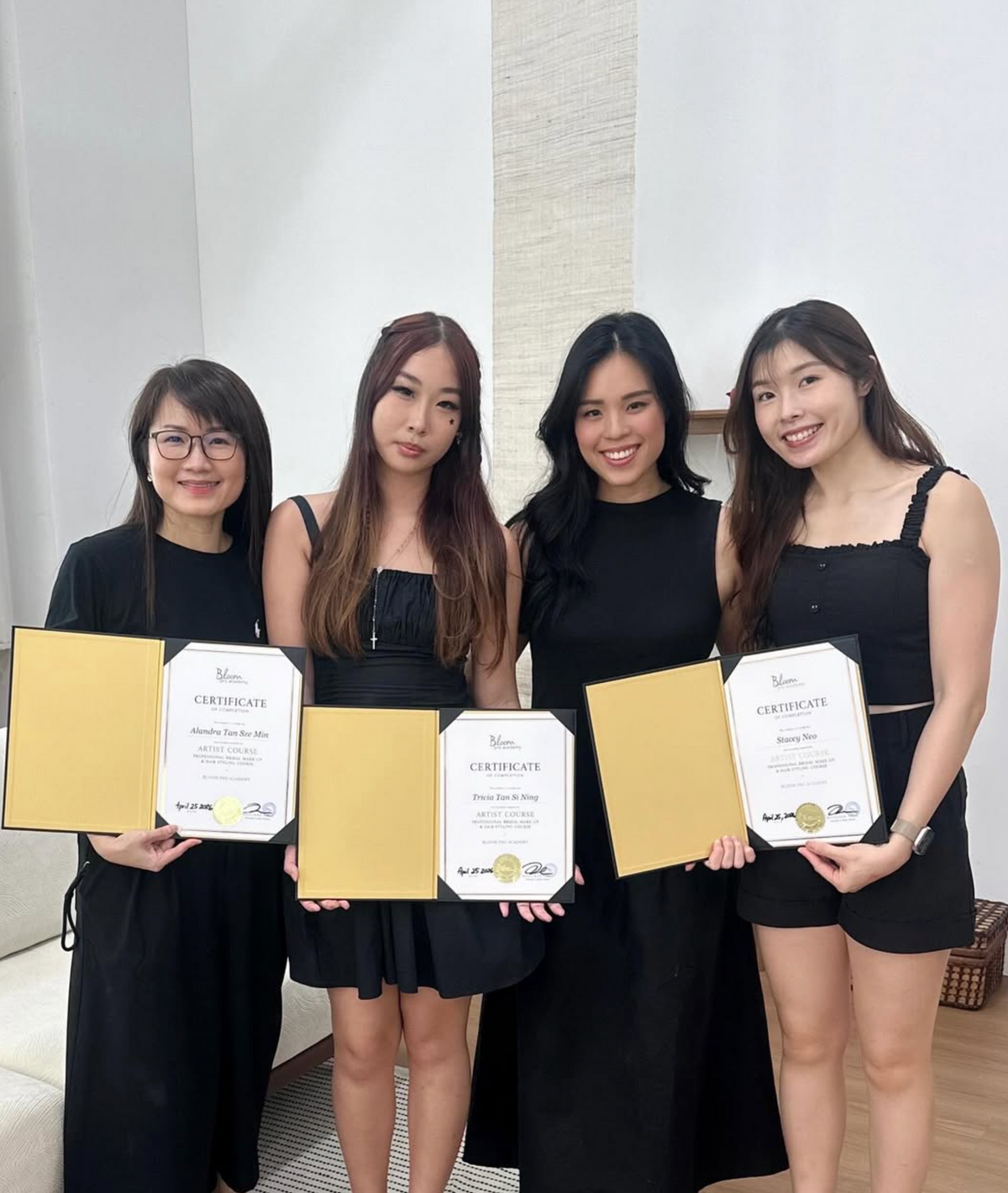
One of the questions I hear from aspiring makeup artists is whether you actually need a certificate to become a makeup artist in Singapore.
The short answer is: not necessarily.
You don't need a specific makeup qualification simply to start working as a freelance makeup artist in Singapore.
But I actually think there's a more important question to ask:
Are you ready to work on a paying client?
Because having a certificate and being ready to work professionally aren't necessarily the same thing.
What Do Clients Actually Look For in a Makeup Artist?
Most clients aren't going to ask to see your makeup certificate before booking you.
They're going to look at your work.
They want to know whether you can create the type of makeup they like, whether you've worked on different faces, and ultimately whether they can trust you with their face — especially for something as important as their wedding day.
This is where your portfolio, technique, professionalism and experience become much more important than simply having a certificate.
So Why Take a Professional Makeup Course?
If you don't technically need a certificate, you might wonder why you should take a professional course at all.
For me, the value of professional training isn't simply the certificate you receive at the end.
It's everything you should be able to do by the time you receive it.
Doing makeup on yourself is very different from doing makeup professionally.
You might have a client with oily skin in the morning, someone with dehydrated skin in the afternoon, and someone with mature skin the following day.
You need to know how to look at the person sitting in front of you and adapt what you've learnt.
That's something that comes from training, practice and experience.
If you're interested in learning these skills professionally, you can read more about our Professional Makeup Course in Singapore.
Learning to Work on Different Faces
This is one of the biggest things I emphasise to my students.
It's relatively easy to become familiar with doing makeup on your own face.
You already know your features. You know where you like your blush. You know which lashes suit your eyes. You know how your skin reacts to different foundations.
And then someone completely different sits in your chair.
Suddenly, you have to figure it all out again.
Different eye shape. Different skin texture. Different face shape. Different preferences.
That's where you really start learning to become a makeup artist.
At Bloom Pro Academy, we provide live models for our students to practise on because I want them to experience working on different faces while they still have an instructor beside them to guide and correct them.
A Certificate Doesn't Automatically Make You a Makeup Artist
I think this is something that's important to talk about.
Finishing a course is really only the beginning.
You still need to practise.
You need to build your portfolio.
You need to learn how to communicate with clients.
You need to figure out what kind of makeup artist you want to become.
And eventually, you need to put yourself out there and get your first few bookings.
We've actually written about some of the common mistakes beginner makeup artists make, because the transition from being a student to actually working professionally is a learning process in itself.
Your confidence grows with every face you work on.
What Should You Look For in Professional Makeup Training?
If you're comparing makeup artist certification courses in Singapore, I wouldn't choose one simply based on the certificate you receive.
Look at the actual training.
How much hands-on practice will you get?
Will you work on different faces?
Will someone be able to correct you individually?
Are you learning how to adapt your makeup rather than simply copying a look?
And what happens when you graduate?
At Bloom Pro, our classes are kept to one to two students, so we're able to spend a lot of time watching how each student works and correcting techniques along the way.
Makeup products are provided during training, as well as live models for practice.
Our professional course students also receive a graduation photoshoot so they have professional images they can begin using to build their portfolio.
What Happens After You Get Certified?
This is where the real journey starts.
Your first client might come through a friend.
Your first bridal booking might come through Instagram.
You might start assisting another makeup artist, collaborate with photographers to build your portfolio, or take smaller jobs while gaining experience.
There isn't one correct way to build a makeup career.
And you definitely don't need to have everything figured out immediately.
If you're currently wondering what comes after makeup school, you can also read our guide on what to do after completing a professional makeup course in Singapore.
The important thing is to keep practising, keep putting your work out there and gradually build both your skills and your reputation.
Do You Need a Makeup Artist Certificate in Singapore?
So, do you need a certificate to become a makeup artist in Singapore?
Not necessarily.
But if you want to work professionally, I do think there's enormous value in being properly trained before you start accepting paying clients.
Don't choose a course simply because you want a certificate to put on your wall.
Choose it because you want to learn how to do the job confidently.
If becoming a professional makeup artist is something you've been thinking about, you can explore our Professional Makeup Course in Singapore and see what the training covers.
And if you're curious but aren't ready to commit to a full course yet, you can start with our Professional Makeup Course Trial to experience a class first.