
If you're searching for a makeup course in Singapore, you'll quickly realise there are many different options available.
Some courses are designed for beginners who simply want to improve their own makeup skills. Others are designed for aspiring makeup artists who want to work professionally with clients.
So how do you know which makeup course is right for you?
Before looking purely at price or course duration, here are some of the most important things I believe you should consider.
1. Decide What You Want to Do After the Course
Start with your end goal.
If you simply want to learn how to apply makeup on yourself, a personal makeup lesson may be all you need.
But if your goal is to eventually work as a makeup artist, take bridal clients or build a freelance makeup business, look for a professional makeup course that teaches you how to work on different people — not just yourself.
Professional makeup artistry requires much more than knowing how to create one beautiful look.
You'll need to understand different face shapes, eye shapes, skin types, skin tones and client preferences.
That comes from practice.
2. Look at the Class Size
One of the biggest things I would consider when choosing a makeup course is how much individual attention you'll actually receive.
Makeup is a practical skill.
You can watch a demonstration and understand the theory, but the real learning often happens when you attempt the technique yourself and someone is there to correct your placement, pressure, colour choices or application.
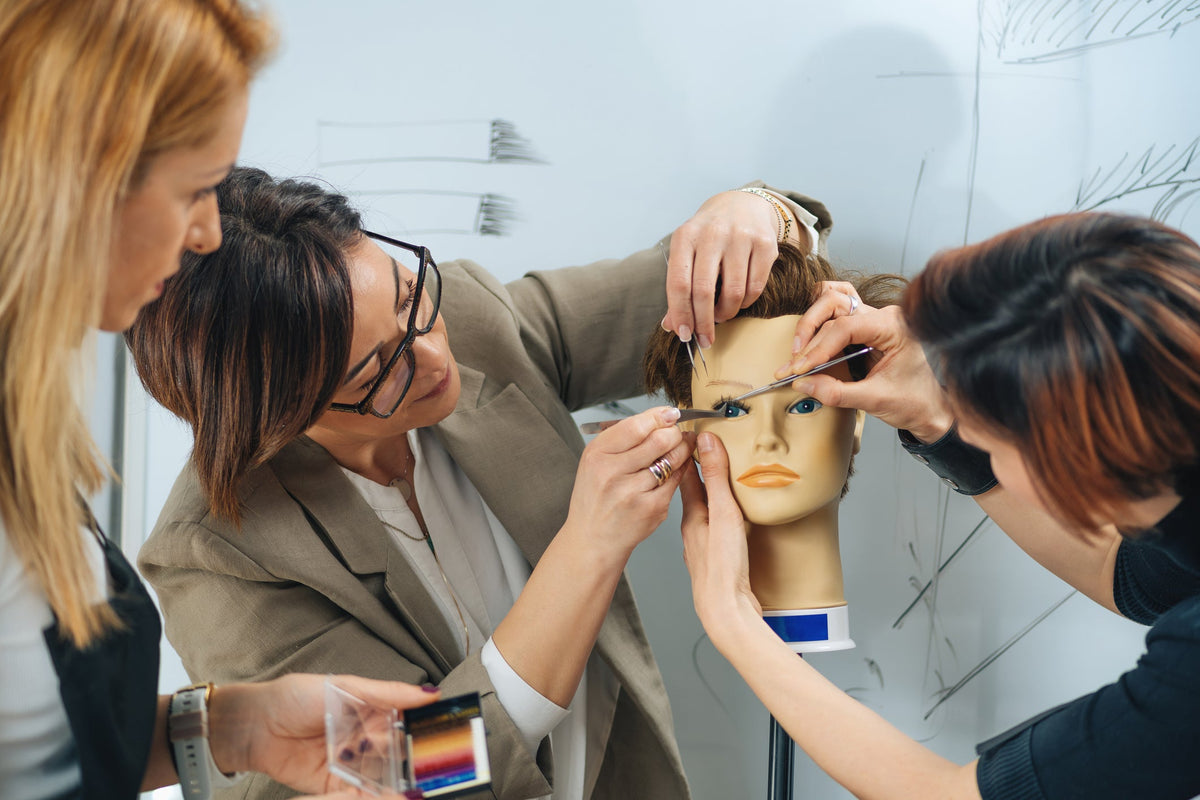
At Bloom Pro Academy, our training is kept to one-to-one or a maximum of two students, so I can work closely with each student throughout the course.
[Explore our Professional Makeup Course in Singapore →]
3. Find Out Whether You'll Practise on Different Models
Learning makeup on the same face repeatedly can only take you so far.
A professional makeup artist needs to be comfortable adapting their technique.
Someone may have hooded eyes. Another client may have dry or mature skin. Another may want very natural makeup, while someone else wants something considerably more glamorous.
That's why practising on different faces is important.
At Bloom Pro Academy, live models are provided during training, allowing students to gain experience working on people other than themselves.
4. Look Beyond the Makeup Techniques
A good professional course shouldn't only teach you where to put eyeshadow or how to apply foundation.
You also need to understand what happens when a real client sits in your chair.
How do you conduct a consultation?
How do you interpret reference photographs?
What happens if a client doesn't like something?
How do you work efficiently while still producing good work?
Technical ability is important, but becoming a working makeup artist also requires confidence, communication and experience.
5. Consider Whether Hairstyling Matters to Your Career
If you're hoping to enter the bridal industry, being able to offer both makeup and hairstyling can be extremely useful.
You don't necessarily need to learn everything at once, but it's worth thinking about the type of artist you eventually want to become.
Bloom Pro Academy offers both professional makeup training and professional hairstyling training, so students can choose the path that makes sense for their goals.
[Learn about our Professional Hairstyling Course →]
6. Ask What Happens When You Finish
Graduation shouldn't necessarily be the first time you start thinking about getting clients.
Before enrolling, ask yourself whether the course is preparing you to actually use your skills professionally.
At Bloom Pro Academy, students also receive a graduation photoshoot, giving them professionally photographed work that can help them begin building their portfolio.
For someone starting from zero, having work you're proud to show potential clients can make that first step much less intimidating.
7. Don't Choose a Makeup Course Based on Price Alone
Naturally, cost matters.
But two makeup courses with very different structures aren't necessarily comparable simply because they're both called “makeup courses.”
Consider:
- class size and individual attention
- course content
- practical hours
- whether models are provided
- what products and equipment you need
- opportunities to practise
- portfolio development
- flexibility of the training
The cheapest course isn't automatically the best value, and the most expensive course isn't automatically the best either.
Look at what you're actually receiving and whether it matches the kind of makeup artist you want to become.
What Makeup Course Should You Choose?
Ultimately, the right makeup course in Singapore depends on what you're hoping to achieve.
If you want to learn makeup purely for yourself, choose a personal course designed around your own features and routine.
If you want to become a professional makeup artist, look for training that gives you plenty of practical experience, exposure to different faces and individual feedback.
I founded Bloom Pro Academy to provide the kind of hands-on training I believe aspiring artists benefit from: small classes, real models, practical experience and close guidance throughout the learning process.
If you're considering becoming a makeup artist, you can read more about our course below.
[Explore Bloom Pro Academy's Professional Makeup Course in Singapore →]
Or, if you're not sure whether the full course is right for you yet, you can contact us about starting with a trial lesson.